
Myth: My Landlord’s Insurance Covers My Stuff.
Honestly, this is probably the biggest misunderstanding about renting in California. Many people think their landlord’s policy will swoop in and replace their belongings if something bad happens. That’s a big nope.
Your landlord’s insurance? That covers the building itself – the walls, the roof, the appliances they own. It doesn’t cover your couch, your laptop, your clothes, or that vintage record collection you spent years curating. If a fire rips through your apartment in, say, Oakland, or a thief busts in while you’re at work in Sacramento, you’re on your own without renters insurance.
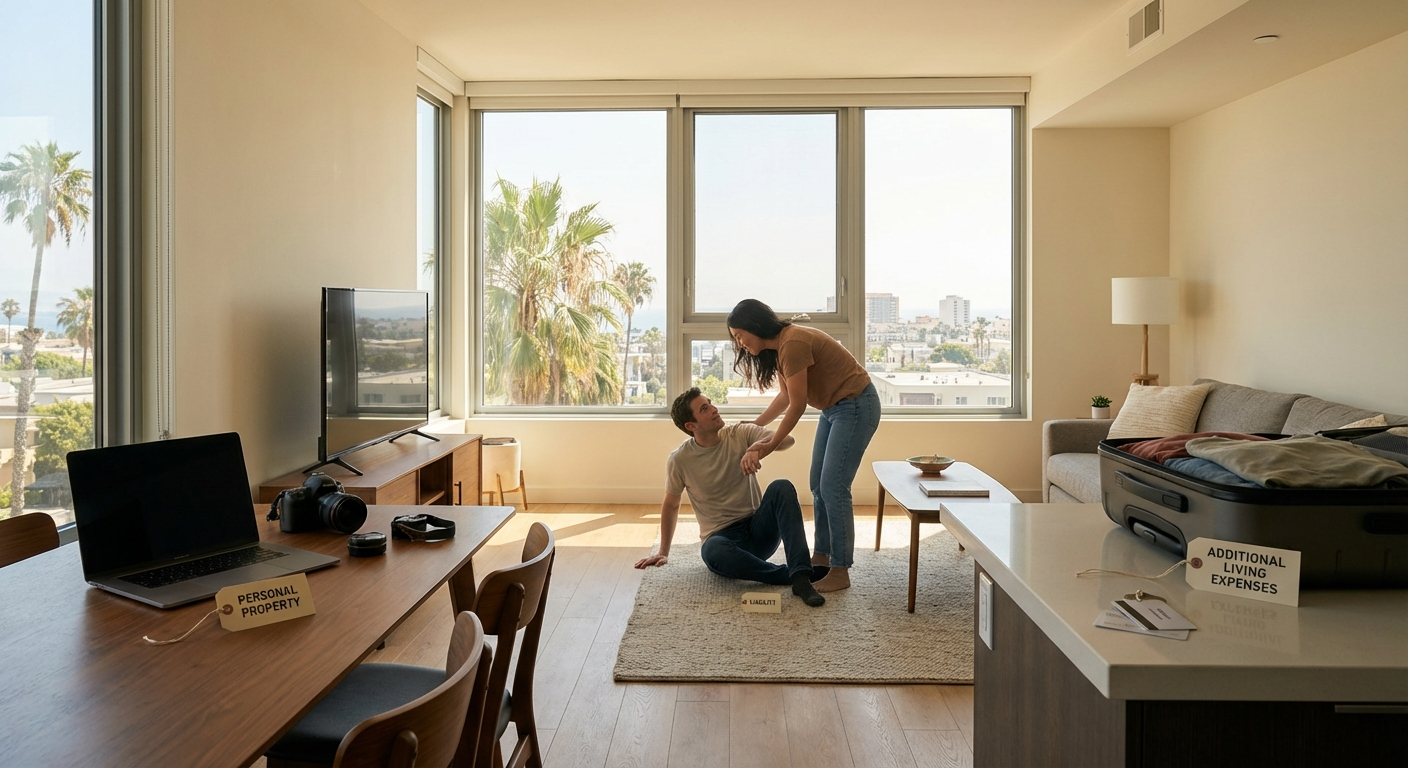
This is where personal property coverage comes in. It’s the core of any renters policy. It protects your personal belongings from a whole list of “perils” – fancy insurance talk for bad things that can happen. We’re talking about things like fire, smoke, theft, vandalism, certain types of water damage (like a burst pipe, not a flood), and even windstorms. Imagine your apartment in Santa Monica gets broken into. This part of your policy would help you replace your stolen goods.
But wait — there’s a catch with “replacing.” Most policies offer two ways to value your stuff: Actual Cash Value (ACV) or Replacement Cost Value (RCV). ACV pays out what your item was worth at the time it was damaged or stolen, factoring in depreciation. So, that five-year-old laptop? You’d get its depreciated value. RCV, on the other hand, pays what it costs to buy a brand-new version of that item today. The difference can be huge. Always opt for RCV if you can afford it. It’s a lifesaver when you’re starting from scratch.
What About When I Break Something? Or Someone Gets Hurt?
That’s not the whole story. Beyond your personal belongings, renters insurance offers something called liability coverage. This is incredibly important, and it protects you financially if you’re found responsible for damage to someone else’s property or if someone gets hurt in your rented space.
Say a friend visits your place in the Inland Empire, trips over your rug, and breaks an arm. Or maybe your bathtub overflows, causing water damage to the apartment below. Perhaps your dog, usually a sweetheart, nips a delivery driver. In any of these scenarios, you could be on the hook for medical bills, repair costs, or even legal fees if they decide to sue you. Liability coverage steps in to pay those costs, up to your policy limits. Most basic policies start at $100,000 in liability coverage, but many experts suggest aiming for $300,000 or even $500,000 for better peace of mind.
Which brings up something most people miss: The liability portion of your policy often extends beyond your rental unit. If you accidentally cause damage to someone else’s property away from home, like spilling coffee on an expensive rug at a friend’s house, your renters insurance might still offer some protection. It’s not just about what happens inside your four walls.

Where Do I Go If My Apartment Burns Down?
This is a scary thought for anyone, especially in California, where natural disasters feel like a constant threat. What if your rental becomes uninhabitable due to a covered peril? Where do you live while it’s being repaired? Who pays for that?
This is where “Additional Living Expenses” (ALE) coverage, sometimes called “Loss of Use,” becomes a hero. If your apartment in, say, San Jose, is damaged by a fire or other covered event and you can’t live there, ALE helps pay for your temporary housing costs. We’re talking hotel stays, a short-term rental, even extra food expenses because you can’t cook in your own kitchen. It covers the difference between your normal living expenses and the costs you incur while displaced.
Remember those fires near Ventura County in 2025? (Let’s hope not, but it’s a real possibility.) If you were forced to evacuate and your building was damaged, ALE would kick in. It’s not a blank check, of course. There are limits, usually expressed as a percentage of your personal property coverage or a specific dollar amount, and often a time limit, like 12 or 24 months. But having that financial cushion when your whole life is uprooted? That’s invaluable.
Does Renters Insurance Cover Earthquakes or Wildfires in California?
Ah, the Golden State’s unique challenges. The short answer is yes. The real answer is more complicated.
Let’s talk about earthquakes first. Standard renters insurance policies do not cover earthquake damage. Period. If you live anywhere near a fault line – and in California, that’s practically everywhere from the Bay Area down to San Diego – you’ll need a separate earthquake insurance policy or an endorsement added to your renters policy. Most earthquake coverage in California comes through the California Earthquake Authority (CEA). It’s an extra cost, often with a high deductible, but for many Californians, it’s a risk worth mitigating.
Wildfires are a different beast. Generally, fire damage from a wildfire *is* covered under the personal property and ALE sections of a standard renters policy. However, the insurance market in California is wild right now. With increasing wildfire risk, some insurers are pulling back from certain areas or raising rates significantly. While renters haven’t seen the same premium hikes as homeowners (where premiums jumped 40% between 2022 and 2024 in some areas), the shifting landscape does affect availability and pricing. If you live in a high-risk wildfire zone, like parts of the Sierra Foothills or the canyons around Los Angeles, always double-check with your agent that wildfire is explicitly covered and what your deductibles look like.
What Doesn’t Renters Insurance Cover?
Just as important as knowing what’s covered is understanding the exclusions. Renters insurance isn’t a magic shield for everything that goes wrong. Here are some common things it typically won’t cover:
- Flooding: This is a big one. Damage from floods – rising water from the ground up – is almost always excluded. You’d need a separate flood insurance policy, usually through the National Flood Insurance Program (NFIP), to protect against that.
- Pest Infestations: Bed bugs, termites, rats? Your landlord is usually responsible for these, but your renters policy won’t cover the cost of extermination or replacing items damaged by pests.
- Intentional Damage: If you, or someone living with you, intentionally damages your property or someone else’s, don’t expect your policy to pay up.
- Roommate’s Stuff: Unless your roommate is specifically listed on your policy, their belongings aren’t covered. They’ll need their own policy.
- Wear and Tear: Insurance covers sudden, accidental damage. It doesn’t cover things that naturally break down over time.
- High-Value Items Without Endorsements: Got expensive jewelry, fine art, or rare collectibles? Standard policies have limits on how much they’ll pay out for these items. You’ll likely need to add a “scheduled personal property” endorsement to cover them adequately. This lists specific items and their appraised value.
How Much Does Renters Insurance Cost in California?
This is the question everyone asks. And it’s a good one. The great news for renters is that it’s generally very affordable, especially compared to homeowners insurance. You won’t see premiums jump 40% between 2022 and 2024 for renters like they did for homeowners, but costs are still rising slightly.
Several factors play into your premium. Your location in California matters – a high-crime area in a big city might have slightly higher rates than a quiet suburb. The amount of coverage you choose for your personal property and liability limits will affect the price, naturally. Your deductible – the amount you pay out-of-pocket before your insurance kicks in – also makes a difference; a higher deductible usually means a lower premium.
Also, the specific insurer you choose can impact the price. State Farm, AAA, Farmers, and many others all offer renters insurance, and their pricing can vary quite a bit for the same coverage. It really pays to shop around.
Ready to see what it might cost you? You can get a fast, free quote right now and see how affordable peace of mind can be: Get Your Free Renters Insurance Quote
Finding the Right Policy in the Golden State
With all these moving parts – personal property, liability, ALE, earthquake considerations, wildfire risks – choosing the right renters insurance can feel a bit daunting. That’s why working with an experienced professional makes a world of difference. An independent insurance agent, like Karl Susman of Cheap Renters Insurance California (CA License #OB75129), can help you sort through the options.
They don’t work for just one company. Instead, they work with multiple insurers, comparing policies and prices to find the best fit for your specific needs and budget. They understand the nuances of the California market, from Prop 103’s impact on rate changes to the ins and outs of earthquake endorsements. They can explain the difference between ACV and RCV in plain English and help you decide on appropriate liability limits.
Don’t just grab the cheapest policy you find online. Take a few minutes to talk to an expert. It could save you a lot of headache and money down the road.
Want to explore your options with someone who knows the California insurance scene inside and out? Start here: Compare California Renters Insurance Quotes
Frequently Asked Questions About California Renters Insurance
Do I really need renters insurance in California?
Many landlords in California now require renters insurance as part of your lease agreement. Even if yours doesn’t, it’s a smart idea. Think about it: your landlord’s policy protects their building, not your personal belongings. Without renters insurance, if a fire or theft occurs, you’d have to replace everything out of your own pocket. For the relatively low cost, it offers significant financial protection.
What’s a deductible, and how does it work with renters insurance?
A deductible is the amount of money you agree to pay out-of-pocket before your insurance company starts paying for a covered loss. For example, if you have a $500 deductible and your laptop is stolen (a $1,200 loss), you’d pay the first $500, and your insurance would pay the remaining $700. Choosing a higher deductible usually lowers your monthly premium, but means you pay more if you file a claim.
How much coverage do I need for my personal belongings?
This depends entirely on how much stuff you own and what it’s worth. A good way to figure this out is to create a home inventory list. Walk through your apartment, room by room, listing items and their estimated value. Take photos or videos. This helps you get an accurate estimate for your personal property coverage and also makes filing a claim much easier if you ever need to. Don’t forget to account for furniture, electronics, clothing, and kitchenware.
Does renters insurance cover my car?
No, renters insurance does not cover your vehicle. Your car is covered by your auto insurance policy. However, if items are stolen *from* your car while it’s parked at your rental property, your renters insurance might cover those personal belongings, depending on the policy and circumstances. But damage to the car itself? That’s auto insurance territory.
This article is for informational purposes only and does not constitute financial advice.