
Your Home Office Gear: More Than Just a Laptop, Right?
Remember when “working from home” meant occasionally checking emails on your personal laptop from the couch? Most of us do. But those days feel like a distant memory now. For many Californians, home has become the primary office, a dedicated workspace equipped with more than just a basic computer. We’re talking multiple monitors, high-speed printers, specialized software, ergonomic desks, fancy microphones for those endless Zoom calls, even professional-grade cameras for content creators. It’s a significant investment, often totaling thousands of dollars.
It’s easy to just assume that if your home office gear gets stolen, damaged by a fire, or ruined in a flood — a real concern in places like the Valley after a big storm — your standard renters insurance will cover it all. After all, it’s *your* stuff, in *your* home. But here’s the thing: that assumption can leave you in a real bind. Most renters policies have a sneaky little clause that can drastically limit how much they’ll pay out for your business-related property.
What Even *Is* Renters Insurance, Anyway? (And Why It Matters for Your Desk)
At its core, renters insurance protects two main things: your personal belongings and your personal liability. If a fire rips through your apartment in San Diego or a burst pipe floods your condo in Sacramento, your policy helps pay to replace your clothes, furniture, and electronics. If a guest slips and falls in your kitchen, your liability coverage kicks in to help with medical bills and legal fees. It’s pretty straightforward for most everyday items.
For years, many renters in California skipped buying this coverage. Why bother? they’d think. My landlord has insurance. But that landlord’s policy only covers the building itself, not your personal possessions inside it. If you lost everything in a blaze, you’d be starting from scratch. That’s a big difference.
Connecting this back to your home office: most policies *do* cover some personal items, and yes, your personal laptop or TV would likely fall under that umbrella. But when those items, or other specialized equipment, start being used primarily for earning an income, insurance companies often view them differently. That’s where the limits begin.
The “Business Property” Trap: Where Standard Policies Fall Short
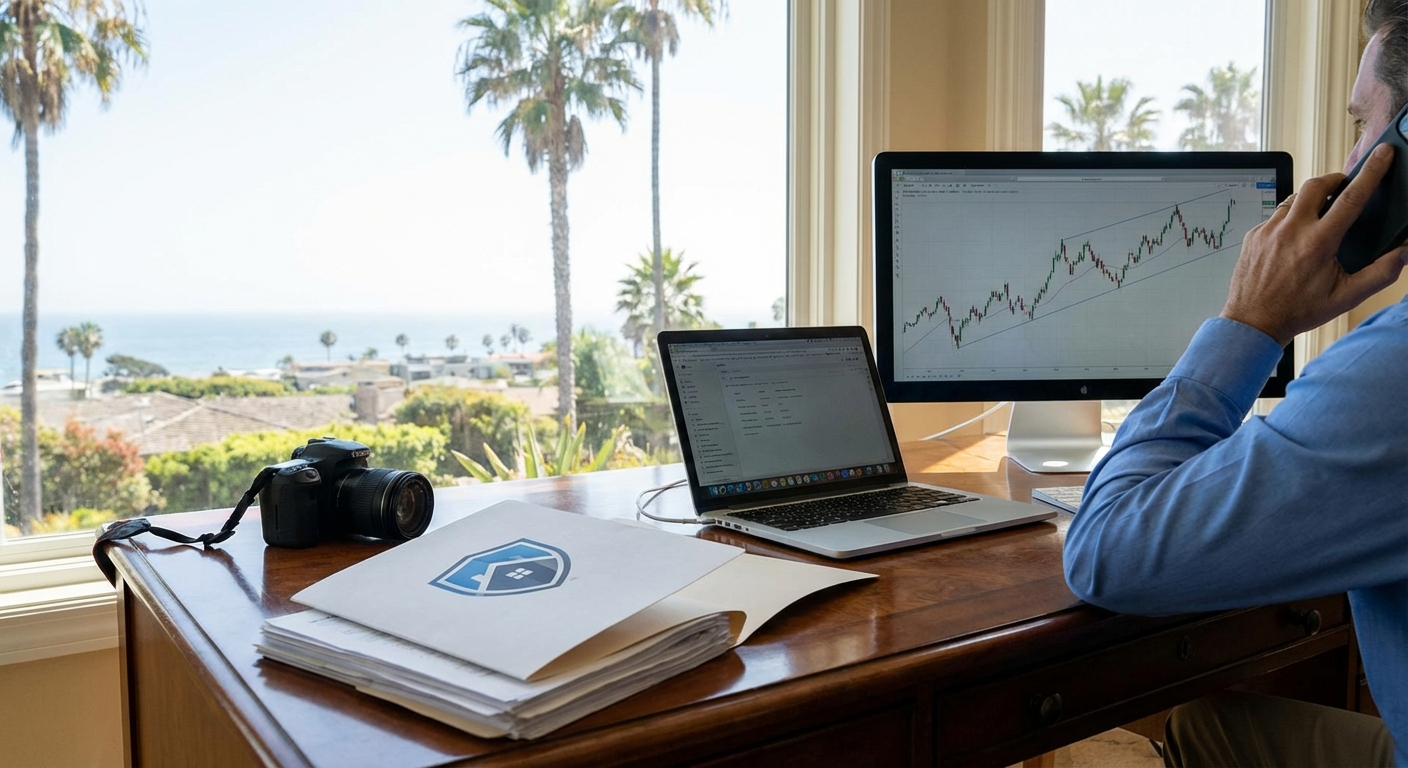
This is where things get a bit sticky for home office workers. Standard renters insurance policies typically include a sub-limit for “business property.” This means that while your policy might offer $30,000 in personal property coverage overall, it might only cover $2,500 for business property *on your premises*. And if that business property is stolen from your car while you’re out, or from a co-working space, that limit can drop even further, sometimes to just $500.
That might sound okay if you just have a basic laptop. But let’s add it all up:
* A high-end desktop computer: $2,000
* Two large monitors: $600
* Specialized software licenses: $500
* A professional printer/scanner: $400
* An ergonomic chair and standing desk: $1,000
* A fancy camera for product shots or video calls: $800
Suddenly, you’re at $5,300 in equipment. If your policy only covers $2,500 for business property, you’re looking at a $2,800 gap out of your own pocket. That’s a gut punch, especially after a disaster. This isn’t just theory, either. We’ve seen this exact scenario play out with clients in places like Orange County and the Inland Empire.
Is Your Employer’s Insurance Going to Save You? (Probably Not)
Here’s another common misconception: “My company provided the equipment, so they’re responsible for it, right?” Or, “I use my own stuff for work, but my employer has good insurance, so I’m covered.” The short answer is yes. The real answer is more complicated.
If your employer *owns* the equipment they provide you – say, a company laptop or a specific monitor – then typically, their business insurance policy would cover its loss or damage. But here’s where it gets interesting. That only applies to *their* property. It doesn’t extend to *your* personal equipment that you use for work.
When Your Own Gear Becomes Your Employer’s Problem (Or Not)
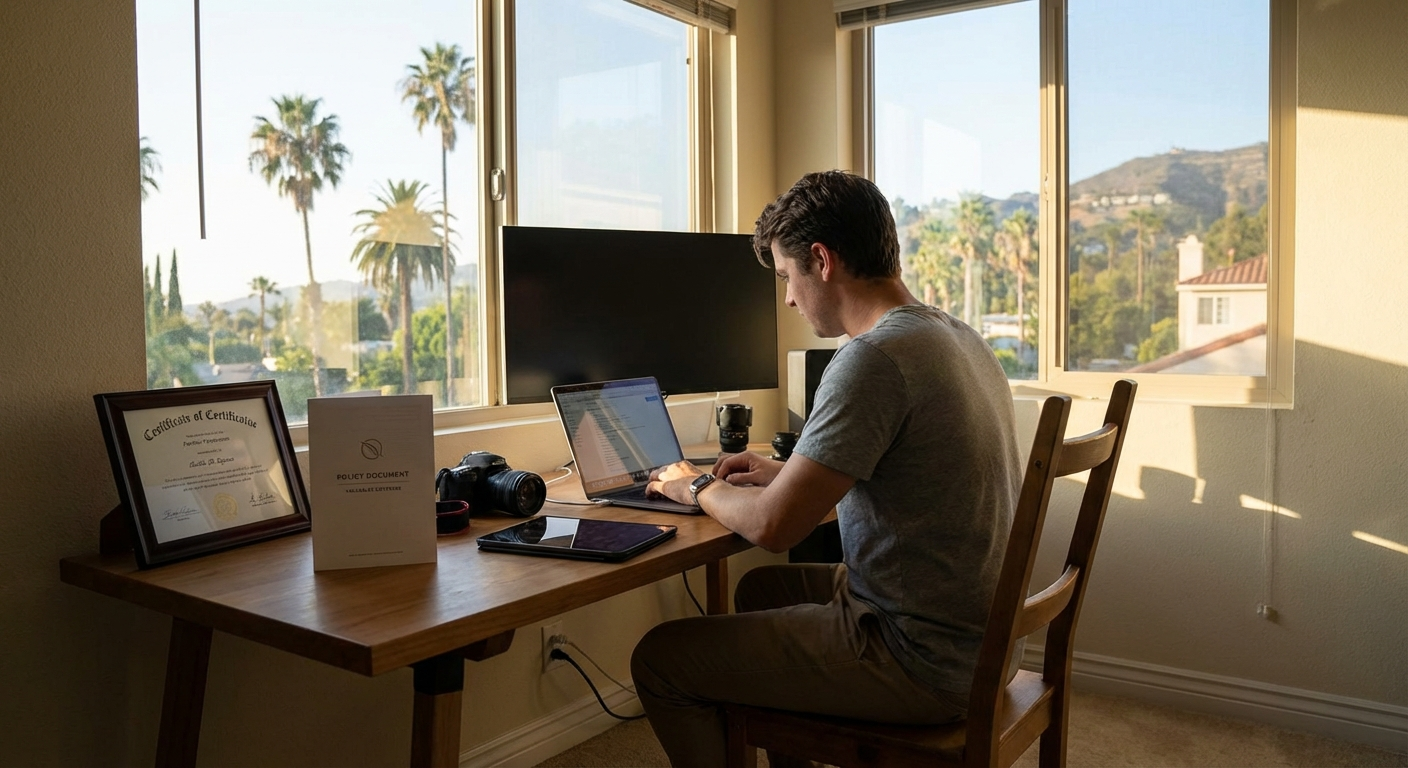
Think about it this way: if your company sends you a laptop, and it gets stolen from your apartment, they’ll likely replace it. It’s their asset. But if *your* personal laptop, which you use daily for work, gets stolen, that’s usually on you. Your employer’s general liability or property insurance isn’t designed to protect the personal belongings of their employees, even if those belongings are used to do company work.
This becomes especially tricky in hybrid work models. Maybe you use your personal desktop but a company-issued monitor. Or you’re a freelancer using all your own gear. The lines blur, but the responsibility for your personal property often remains squarely with you.
Boosting Your Protection: Endorsements and Specific Policies
So, what’s a savvy home office worker to do? You’ve got options to avoid that painful gap in coverage. The most common way to beef up your renters insurance for business property is by adding an endorsement or rider to your existing policy.
This is a fancy word for an add-on. A “Home Business Endorsement” or “Business Pursuits” rider can significantly increase the limits for your business property. Instead of $2,500, you might be able to get $10,000, $20,000, or even more, depending on your needs and the insurer. This endorsement often comes with a modest increase in your premium, but it’s usually a fraction of what it would cost to replace all your gear out of pocket.
That’s not the whole story. If your home office is more than just a desk and a computer – maybe you have inventory, specialized machinery, or clients regularly visiting your home – then a simple endorsement might not be enough. In those cases, you might need to consider a separate Business Owner’s Policy (BOP) or a dedicated commercial policy. This type of policy is designed for actual businesses, even those run from a spare bedroom in your San Jose apartment.
What If You Have Clients Visiting? (Liability Beyond Property)
Which brings up something most people miss. If you have clients, vendors, or delivery people coming to your home office, your liability concerns multiply. What if a client trips on your rug and breaks an arm? Your standard renters liability might cover it, but a business-specific liability policy offers much broader protection for accidents related to your work.
It also extends to things like data breaches if you handle sensitive client information, or professional errors if you’re offering services. This is a whole different ballgame from just replacing a laptop and illustrates why a conversation with an experienced agent is so important.
The California Angle: What Makes Things Different Here?
California isn’t just any state; it’s unique, especially when it comes to insurance. Wildfires, for instance, have changed the landscape dramatically. Insurers have been adjusting rates, pulling back from certain high-risk areas, and even increasing requirements across the board. The FAIR Plan, meant as a last resort, has seen a surge in applicants. Even Prop 103, which gives the state insurance commissioner power over rates, has been a constant point of discussion.
This dynamic environment affects *all* insurance, including renters policies and any add-ons for home office equipment. After the 2025 LA fires (a hypothetical, but realistic, future scenario based on current trends), you might see insurers tightening their belts or raising prices in places like Malibu or Santa Rosa. Similarly, increased flood risks in areas like the Central Valley or coastal communities could impact property coverage. Honestly, finding the right policy can feel like a maze, especially with so many factors at play.
Getting Real: How to Figure Out What You Actually Need
The first step, and probably the most tedious, is to take inventory. Get a pen and paper, or use a spreadsheet. List *everything* in your home office that’s work-related. Don’t forget the small stuff: a nice webcam, special software, even the chair you spent a fortune on because your back demanded it.
Next, estimate the replacement cost for each item. This isn’t what you paid for it five years ago; it’s what it would cost to buy a brand-new, comparable item *today*. Take photos of everything. Keep receipts if you have them. This documentation is your best friend if you ever need to file a claim. This part feels tedious, I know. But it’s a necessary step to protect your livelihood.
If this all sounds a bit overwhelming, you’re not alone. That’s exactly why folks like Karl Susman and the team at Cheap Renters Insurance California are here. With CA License #0B75129, they’ve been helping Californians figure out these exact puzzles for years. A quick chat can clarify so much. You can start the conversation or get a quote right now at: https://cheaprentersinsurancecalifornia.com/quote/
Beyond the Basics: What Else Should You Consider?
Once you’ve got your inventory, a few other things should be on your radar.
**Replacement Cost Value (RCV) vs. Actual Cash Value (ACV):** This is a big one. Some policies pay out based on ACV, which factors in depreciation. So, that laptop you bought three years ago? They’ll pay you what it’s *worth* today, not what it costs to replace. RCV pays to replace it with a new, comparable item, regardless of age. Always push for RCV coverage if possible. It makes a huge difference.
**Deductibles:** This is the amount you pay out of pocket before your insurance kicks in. A higher deductible usually means a lower premium, and vice-versa. Think about what you could comfortably afford to pay if you had to make a claim.
**Data Loss/Cyber Coverage:** Your physical equipment is one thing, but what about the data *on* it? Most renters policies won’t cover the cost of recovering lost data or dealing with a cyberattack. If your work involves sensitive client information, this is a separate, but increasingly important, conversation to have.
**Portable Equipment:** Do you take your work laptop to a coffee shop, a client site, or on vacation? Make sure your policy’s business property coverage extends beyond your home. As mentioned, the limits can drop significantly when items are off-premises.
Finding the Right Fit: Don’t Just Settle
You wouldn’t buy the first car you saw, right? Insurance is no different. It pays to shop around and compare options from various carriers. An independent insurance agent, like Karl Susman at Cheap Renters Insurance California, can be invaluable here. They don’t work for one specific company; they work for you. They can look at policies from State Farm, AAA, Farmers, and many others, finding the one that best fits your unique situation in California.
Sometimes, a quick phone call to (877) 411-5200 is all it takes to clear up years of confusion and ensure your valuable home office equipment is properly protected. Don’t let the complexity of insurance leave your valuable home office gear unprotected. Take a few minutes to explore your options and ensure your workspace is truly secure. Get your personalized quote today: https://cheaprentersinsurancecalifornia.com/quote/
FAQs About Renters Insurance & Home Office Equipment
Does my standard renters insurance cover my work laptop if it’s stolen from my home?
Maybe, but probably not fully. Most standard renters policies have specific sub-limits for “business property” – often around $2,500 – which is usually much less than the actual replacement cost of a work laptop and other office gear. You’d likely need an endorsement to increase that limit.
What if I use some personal equipment for work and some just for personal use? How does the policy differentiate?
This is a common gray area. Generally, if an item is *primarily* used for earning an income, it falls under the “business property” definition. If it’s something like a TV that you occasionally use for a work presentation but mostly for entertainment, it might still be considered personal property. It often comes down to the primary use case and how it’s classified during a claim, which is why clear documentation helps.
Can I get coverage for loss of income if my home office equipment is damaged and I can’t work?
Typically, no. Standard renters insurance only covers property damage and liability. Loss of income or business interruption coverage is usually part of a separate business owner’s policy (BOP) or a specific commercial insurance product, not a renters policy.
Is it more expensive to add home office coverage to my renters policy?
Yes, adding an endorsement to increase your business property limits will usually increase your premium. However, the cost is often quite reasonable – sometimes just a few dollars a month – especially when compared to the potential out-of-pocket expense of replacing thousands of dollars worth of equipment after a disaster.
What’s the best way to prove the value of my equipment if I need to file a claim?
Keep a detailed inventory list, take photos or videos of your home office setup, and save receipts for all expensive equipment. Digital copies stored in the cloud are a great idea. This documentation makes the claims process much smoother and helps ensure you get a fair payout.
What’s the real cost of being unprepared when your livelihood literally sits on your desk?
***
This article is for informational purposes only and does not constitute financial advice.