
The Story of Your Stuff: Why Renters in California Can’t Afford to Skip This
Maya and Ben loved their little two-bedroom bungalow in Ventura County. It wasn’t huge, but it had character. Plus, the landlord was amazing. They’d filled it with hand-me-down furniture from Ben’s grandparents, Maya’s growing collection of vintage cameras, and, of course, all their modern tech: laptops, smart TV, a fancy espresso machine. They figured, hey, the landlord has insurance, right? So their stuff was probably covered.
That’s a common thought. A *really* common thought here in California, where rents are high and every penny counts. But here’s the thing: their landlord’s insurance covers the *building*. It covers the walls, the roof, the appliances that came with the place. It does absolutely nothing for Maya’s cameras or Ben’s laptop. Or that sentimental rocking chair. Nothing at all.
What “Personal Property Coverage” Actually Means for Renters
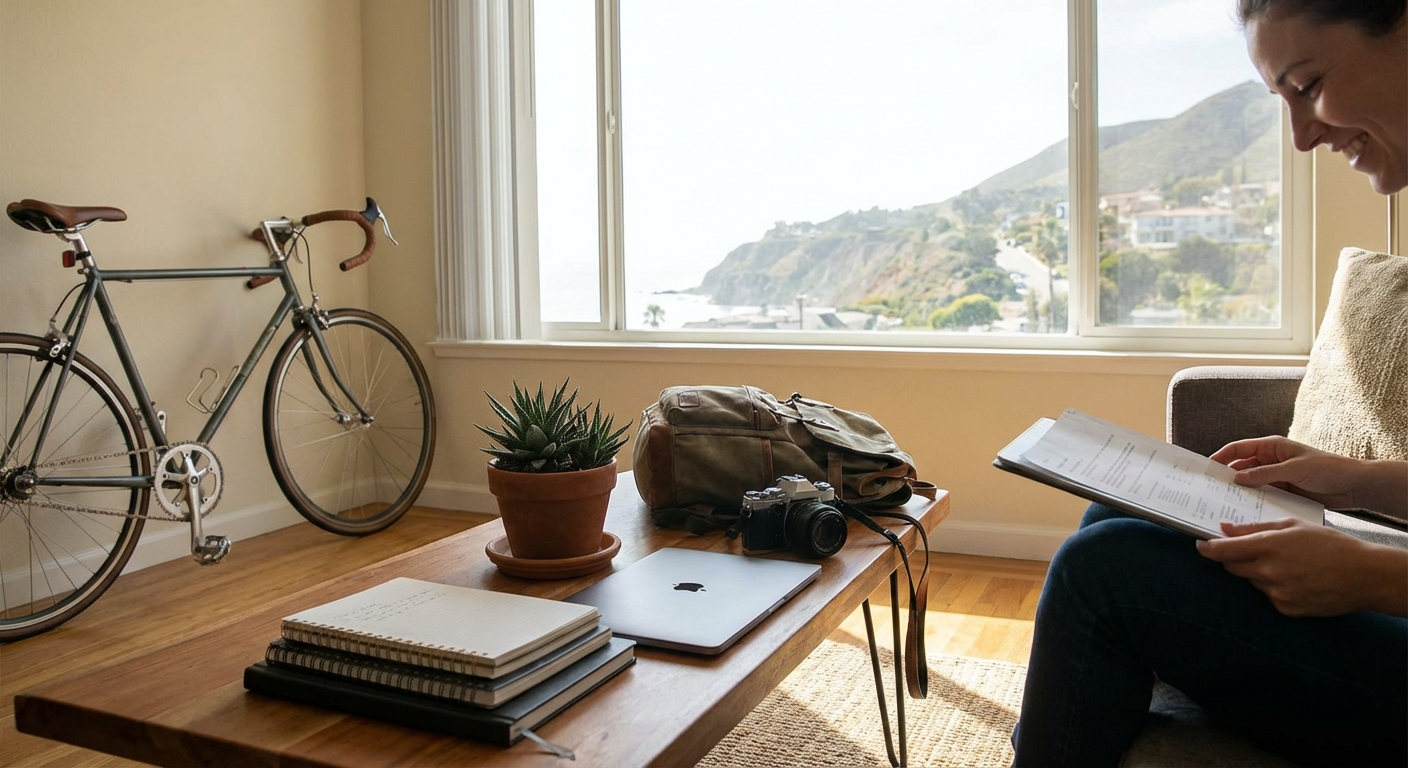
Think about everything you’d pack if you were moving. Your clothes, your books, that gaming console, your grandmother’s jewelry, your bike. All of it. That’s your personal property. Renters insurance personal property coverage is designed to protect all those things you own inside your rented home – and often, even when they’re outside it.
It’s not just about a big fire, though those are certainly a concern here in California. Remember the devastating fires that swept through parts of the state in 2020? Or the concern about what a bad fire season could bring to the foothills of the Sierra or the brushlands around Los Angeles next year? Personal property coverage kicks in for things like fire damage, yes. But it also covers a surprising number of other common mishaps.

What Kinds of Mishaps? You’d Be Surprised
Most policies protect against what the insurance folks call “perils.” These aren’t just the big, dramatic disasters. We’re talking about theft – someone breaking into your place and taking your valuables. Or vandalism. Maybe a pipe bursts in the apartment above you in that San Francisco high-rise, and water streams down, ruining your expensive rug and a stack of books. That’s covered. A sudden electrical surge fries your new computer? Often covered.
One evening, a friend of Maya and Ben’s had her car broken into while parked on a busy street in Santa Monica. Her gym bag, containing a designer watch and some new running shoes, was stolen. She thought, “Well, my car insurance won’t cover stuff *inside* the car if it’s not part of the car itself.” And she was right. But her renters insurance did. Which brings up something most people miss. Your personal property isn’t only covered while it’s sitting pretty in your living room.
Your Stuff Travels With You (Mostly)
Yes, your renters insurance often protects your belongings even when they’re not physically in your rental. If Ben takes his laptop to a coffee shop in Oakland and it gets stolen, his renters insurance might cover it. If Maya’s vintage camera bag disappears from her hotel room while traveling, she could make a claim. There are limits, of course — usually a percentage of your total coverage — but it’s a huge benefit many renters don’t realize they have.
But wait — what about the types of coverage? This is where it gets interesting.
Actual Cash Value vs. Replacement Cost: A Big Difference
This is probably one of the most important decisions you’ll make when setting up your policy. It changes how much you actually get paid if something happens.
* **Actual Cash Value (ACV):** Imagine your five-year-old laptop gets stolen. With ACV, the insurance company will pay you what that laptop was *worth* at the moment it was stolen. That means they factor in depreciation – how much its value has gone down over time. You might have paid $1,500 for it, but after five years, they might only give you $400. That’s not much help for buying a new one, is it?
* **Replacement Cost Value (RCV):** This is generally the better option. If that same five-year-old laptop gets stolen, the insurance company pays you what it would cost to buy a *brand new* comparable laptop *today*. So, if a similar model now costs $1,200, that’s what you get. You can see why this makes a huge difference when you’re trying to put your life back together after a loss. Honestly, if you can afford it, always go for replacement cost. The premium might be a little higher, but the peace of mind is worth every extra dollar.
How Much Coverage Do You Really Need?
This is the million-dollar question – or perhaps the $20,000 question. Most people severely underestimate the value of their belongings. Walk through your apartment right now. Add up everything: your clothes, shoes, kitchenware, furniture, electronics, jewelry, books, even your toiletries. It adds up fast. Most renters will need at least $20,000 to $50,000 in personal property coverage. Some, especially those with expensive hobbies or collections, might need more.
For specific high-value items — like Maya’s vintage cameras, Ben’s heirloom watch, or valuable art — you might need something called a “scheduled” or “floater” policy. This adds extra, specific coverage for those items, often without a deductible, and protects against more types of loss. Say Maya’s camera falls off a table and breaks – a standard policy might not cover that “accidental damage,” but a floater often would.
The California Context: Earthquakes and Floods
Living in California, we’re all too aware of certain natural risks. Earthquakes, for instance. A standard renters insurance policy *does not* cover earthquake damage to your personal property. You need a separate earthquake endorsement for that. It’s an extra cost, yes, but if you’re renting in, say, the Bay Area or near a major fault line, it’s definitely something to consider.
What about floods? This isn’t just about raging rivers; a flash flood in a low-lying area of the Inland Empire, or even a backed-up storm drain in downtown Sacramento, can cause extensive damage. Standard renters insurance *also doesn’t* cover flood damage. You’d need a separate flood insurance policy, typically through the National Flood Insurance Program (NFIP). It’s an added layer of protection that many Californians overlook until it’s too late.
The Cost of Not Having It
“It’s just another bill,” some people say. “I’ll be fine.” But picture this: a kitchen fire starts in your apartment in San Diego. All your furniture is ruined, your clothes are smoke-damaged, and your laptop is a melted mess. Without renters insurance, you’re on the hook for every single penny to replace all of it. That could be tens of thousands of dollars. Can you really afford to buy a whole new life from scratch? For many, the answer is a resounding no.
The reality is, renters insurance in California is surprisingly affordable. We’re not talking hundreds of dollars a month. Often, it’s closer to $15-$30 a month, depending on your location (a unit in a high-fire-risk area might see higher premiums, for example), your deductible, and how much coverage you choose. That’s less than a couple of fancy coffee drinks.
Finding the Right Policy for Your California Life
It’s easy to feel overwhelmed by all the options and exclusions. That’s where a knowledgeable, local agent comes in handy. Someone who understands the unique risks and regulations of California. Karl Susman, with Cheap Renters Insurance California (CA License #0B75129), has been helping Californians find the right insurance for years. He knows the ins and outs of policies from companies like State Farm, AAA, and Farmers, and how to tailor coverage to your specific needs – whether you’re in a high-rise in downtown LA or a quiet duplex in Redding.
They can walk you through the difference between ACV and RCV, help you figure out if you need earthquake or flood coverage, and make sure your valuable items are properly protected. It’s about more than just a policy; it’s about peace of mind.
Ready to protect your personal property and get that peace of mind? You can start with a quick online quote and see just how affordable it can be.
Get Your Free California Renters Insurance Quote Today!
Frequently Asked Questions About Renters Personal Property Coverage
Q: Does my landlord’s insurance cover my personal belongings?
A: Absolutely not. This is one of the biggest misconceptions out there. Your landlord’s policy covers the building itself – the structure, common areas, and their liability. It offers zero protection for your personal possessions if they’re damaged or stolen.
Q: What if I have roommates? Do we all need separate policies?
A: It depends. Some policies allow you to add a roommate to your coverage, but often, it’s simpler and clearer for each roommate to have their own policy. That way, if there’s a claim, there’s no confusion about whose property is whose, and each person’s deductible and coverage limits are distinct. It’s usually the best way to avoid headaches down the road.
Q: What’s a “deductible” and how does it affect my claim?
A: Your deductible is the amount of money you agree to pay out of pocket before your insurance coverage kicks in. So, if you have a $500 deductible and you make a claim for $2,000 worth of stolen items, the insurance company would pay you $1,500. Choosing a higher deductible usually means a lower monthly premium, but it also means you’ll pay more upfront if you ever need to file a claim.
Q: My apartment building has a secure entry. Do I still need theft coverage?
A: Yes, absolutely. While secure entries can deter some crime, they’re not foolproof. Break-ins can still happen, whether through forced entry, someone tailgating into the building, or even a fire or other peril that compromises the security. Plus, your personal property coverage extends beyond just theft from your home; it often covers items stolen from your car or while you’re traveling.
Q: How can I prove what I owned if I need to make a claim?
A: This is crucial! The best way is to create a home inventory. Take photos or video of every room, open closets and drawers, and make a list of significant items with their estimated values. Keep receipts for expensive purchases. Store this inventory in a safe place, like a cloud storage service, so it’s accessible even if your home is destroyed. It makes the claims process much smoother.
If you’re still wondering whether renters insurance is right for your unique situation in California, or if you just want to talk to a human who knows the local market, don’t hesitate to reach out. Karl Susman and his team at Cheap Renters Insurance California are available at (877) 411-5200 to answer your questions and help you explore your options.
Get a Personalized Renters Insurance Quote for Your California Home!
This article is for informational purposes only and does not constitute financial advice.